Guardians of the Wall The Bastion and the Map Beyond the Wall
Where you rest, where you raid, and what Steam has actually named.
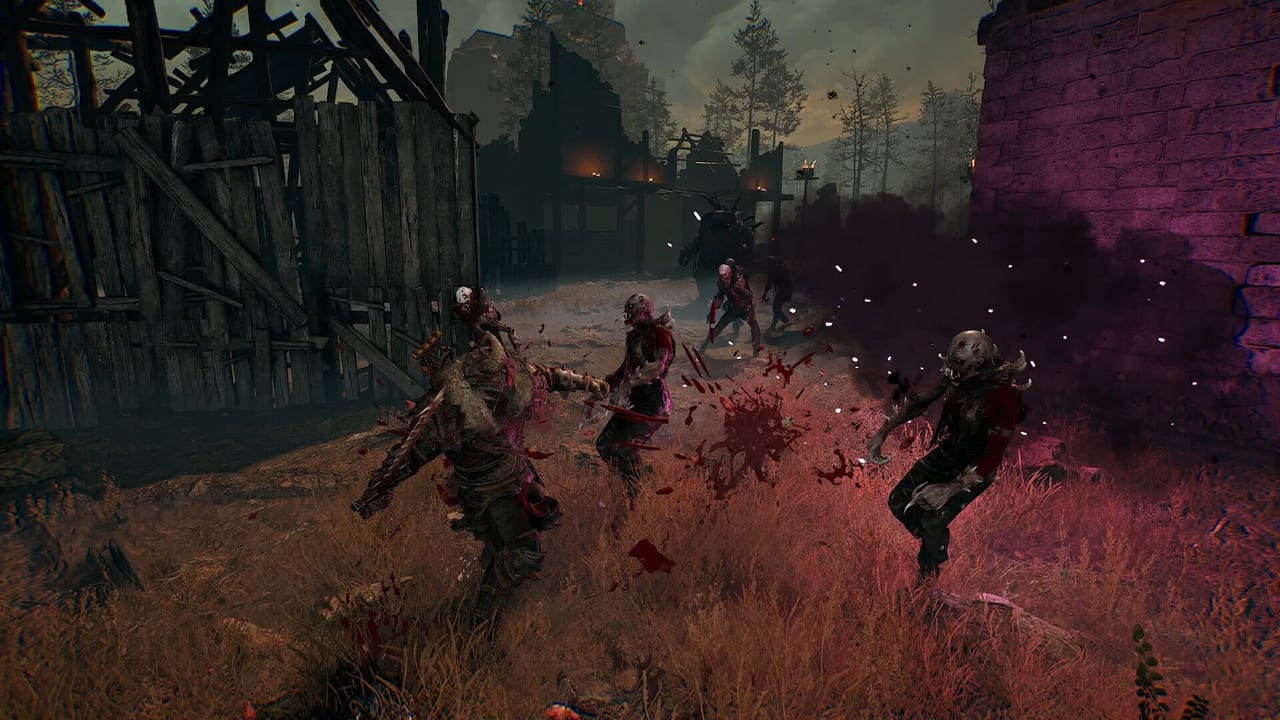
Players search “map” for Guardians of the Wall because the trailer and Steam shots look like a world, not a single corridor. What Boiling Bits has published is not an open-world atlas with named towns. It is a hub-and-raid map: you live in the Bastion, you drop beyond the Wall into typed biomes, and you come back with only some of what you found. This page is the location guide we can write without inventing a fake overworld.
If you need the session checklist instead of geography, start with Getting Started. If you need how a raid ends, use raids and bosses.
The Wall and the last fortress
Steam’s fiction is short on purpose. For ages the Wall protected the last remnants of humanity. Cracks formed. The Abyss is spilling through. You are a Guardian willing to walk the other side. The studio site calls the setting an alternate medieval reality; the store page calls it dark fantasy. Both describe the same shots: burnt pines, palisades, stone houses, torch poles, fog, and undead in the grass.
There is no public scale. Do not expect a minimap of a continent until the playtest HUD shows one. Treat the Wall as the diegetic loading screen between safety and the run.
The Bastion
Between raids you return to the Bastion — Steam’s word for refuge, upgrades, and preparation. Permanent power lives here: resources, essences, rare materials, crafted weapons, ability upgrades, and newly awakened heroes. If a reward is meant to still exist next session, it has to survive this space.
Play the Bastion like a shop, not like a social plaza. Boiling Bits has not published vendors, a crafting bench layout, or a player housing wing. What we know is the contract: this is where hero builds get spent, and where weapons and items stop being raid toys and start being loadout.
If the playtest Bastion is a single courtyard with a workbench, that is enough. Do not wander looking for a city. The game is sold as raids, not as a walking sim between raids.
Biomes Steam has named
These are types, not tourist pins. Learn them as lighting and density, not as collectible regions.
- Ruined strongholds and wooden villages — palisade gates, broken cabins, torch poles. The melee village screenshot is this space. Tight streets punish grenades that bounce. Frontliners belong in the street; casters do not.
- Forgotten graveyards — named on the store page. Expect worse vision and more crawlers. Dash toward audio.
- Cursed battlefields and haunted ruins — longer sightlines for the ranged specialist, worse flanks for a frontliner who stares at the boss.
- Frozen wastelands — listed in key features. Fog and distance. The burnt-forest shotgun shot is the public face of this cold, dead ground.
Procedural encounters sit on top of handcrafted arenas. If a shack layout repeats, the spawn timing will not. Call the pack, not the landmark. That is the whole “map skill” until a named atlas exists.
Handcrafted versus generated
Steam says each mission drops you into a handcrafted arena or a procedurally generated zone where the undead rise in waves. That “or” matters. A handcrafted arena is a boss bowl or a village you can learn. A generated zone is a density puzzle that will not grade you for sightseeing.
In the playtest, screenshot any map name the HUD prints. Those strings are the real wiki. Until then, navigate by silhouette: palisade, cabin, torch, fog, stone wall.
The Breach of the Wall
Key features name a world event: The Breach of the Wall that “changes the battlefield forever.” That is a modifier, not a dated season pass. When a Breach raid appears, treat it as extra cracks and extra density, then keep the same jobs from the Guardian roster. A new skybox does not replace a frontliner.
We will not invent a Breach loot table. When Steam news names one, it goes on the updates hub and here in the same pass.
How to read a space in co-op
Four people in a one-meter gate is a wipe. The co-op guide wants a street-holder, a lane, and a control kit. On this map that means:
- Village: frontliner in the road, ranged on the torch line, caster off the doorway
- Wasteland: ranged owns distance, frontliner intercepts runners, caster saves the grab
- Graveyard: nobody stands still; dash is the map
Solo players should treat every biome as a frontline problem. There is no teammate covering the palisade. See the solo guide.
What this page will become after launch
Q1 2027 may add named yards, a Bastion vendor street, and a real map screen. We will keep this typed list so old raids still make sense. A pretty illustrated map copied from another wiki would be a lie. Steam’s biome list plus the Bastion contract is the honest cartography for an upcoming game.
If you came here from a “Trello map leak,” there is no public board we can verify. Official destinations sit on the links hub. For how loot behaves when you leave a biome, stay with weapons and items.
Frequently Asked Questions
Quick answers to the most common questions.
Is there an open world?
Steam describes a Bastion hub and raid missions in named biome types, not a seamless continent. Treat it as hub-and-raid until a map screen says otherwise.
What is the Bastion?
The refuge between raids. Permanent upgrades, crafting, and hero awakening live here. Session mods from a raid do not all return.
Where is The Breach of the Wall?
It is a named world event in Steam’s key features, not a pin on a public atlas. Treat it as a battlefield modifier when it appears.
Will the playtest have every biome?
Unknown. Playtests often ship a subset. Screenshot HUD names and we will add them here and on the updates hub.